Download Snowflake : SPS-C01 Questions & Answers as PDF & Test Software
Last Updated: Jun 04, 2026
No. of Questions: 374 Questions & Answers with Testing Engine
Download Limit: Unlimited
Reliable & Actual Study Materials for SPS-C01 Exam Success
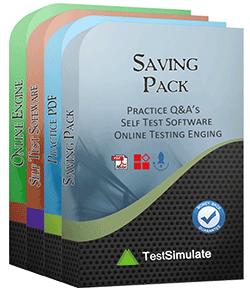
Our Online Test Engine & Self Test Software of TestSimulate SPS-C01 actual study materials can simulate the exam scene so that you will have a good command of writing speed and time. Then multiple practices make you perfect while in the real Snowflake SPS-C01 exam. The package practice version will not only provide you high-quality SPS-C01 exam preparation materials but also various studying ways.
100% Money Back Guarantee
TestSimulate has an unprecedented 99.6% first time pass rate among our customers.  We're so confident of our products that we provide no hassle product exchange.
- Best exam practice material
- Three formats are optional
- 10 years of excellence
- 365 Days Free Updates
- Learn anywhere, anytime
- 100% Safe shopping experience
- Instant Download: Our system will send you the products you purchase in mailbox in a minute after payment. (If not received within 12 hours, please contact us. Note: don't forget to check your spam.)
Snowflake SPS-C01 Practice Q&A's

- Printable SPS-C01 PDF Format
- Prepared by SPS-C01 Experts
- Instant Access to Download
- Study Anywhere, Anytime
- 365 Days Free Updates
- Free SPS-C01 PDF Demo Available
- Download Q&A's Demo
Snowflake SPS-C01 Online Engine

- Online Tool, Convenient, easy to study.
- Instant Online Access
- Supports All Web Browsers
- Practice Online Anytime
- Test History and Performance Review
- Supports Windows / Mac / Android / iOS, etc.
- Try Online Engine Demo
Snowflake SPS-C01 Self Test Engine

- Installable Software Application
- Simulates Real Exam Environment
- Builds SPS-C01 Exam Confidence
- Supports MS Operating System
- Two Modes For Practice
- Practice Offline Anytime
- Software Screenshots
We have introduced too much details about our SPS-C01 test simulates: Snowflake Certified SnowPro Specialty - Snowpark on the other page about Self Test Software & Online Enging. If learners are interested in our SPS-C01 study guide and hard to distinguish, we are pleased to tell you alone. Below we will focus on your benefits if you become our users.
Firstly, we want to stress that our SPS-C01 test simulates: Snowflake Certified SnowPro Specialty - Snowpark are valid as we are researching Snowflake exams many years. Most our experts are experienced and familiar with the real questions in past ten years. We know the key knowledge materials about SPS-C01 exam so that we can always compile valid exam study guide. We are skilled at Snowflake exams with so many years' development. We have stable & high passing rate for Snowflake exams recent years. If you pay attention on our exam study guide after purchasing, you should not worry too much, our products will assist you to clear exam easily. We will assist you to prepare well until you pass exam.
Secondly, our products are high-quality. Our value is obvious to all:
1. PDF version of SPS-C01 study guide is available for you to print out and note your studying thoughts on paper. Self Test Software and Online Enging of SPS-C01 study guide have simulation functions which is not only easy for you to master our questions and answers better but also make you familiar with exam mood so that you will be confident.
2. Our SPS-C01 test simulates materials make you do sharp and better target preparation for your real exam. This ways will cut off your preparation time. Your learning will be proficient.
3. One-shot pass with help of our SPS-C01 test simulates materials will make you save a lot of time and energy. As exam fee is expensive, you may not want to pay twice or more.
4. 365 Days Free Updates Download: you will not miss our valid SPS-C01 study guide, and also you don't have to worry about your exam plan. One year is enough for you to do everything.
Thirdly, About Payment & Refund: we only support Credit Card for most countries. Our purchasing procedure of SPS-C01 test simulates materials is surely safe. If you find any unusual or extra tax & fee please contact us soon. Our promise is "Money Back Guaranteed". Please rest assured. We are legal authoritative company. If you fail exam unluckily and apply for refund, we will refund to you soon. You are not allowed to waste one penny on useless products.
Fourthly, About Discount: as we put into much money on information resources and R&D, all our experts are highly educated and skilled so that our SPS-C01 test simulates materials receive recognition with its high pass-rate from peers and users. Our price is really reasonable. If you really want some discount, you can pay attention on holiday activities. Or if you are regular customers and introduce our SPS-C01 study guide to others we will give you some discount.
Snowflake Certified SnowPro Specialty - Snowpark Sample Questions:
1. You've written a Snowpark stored procedure in Python that utilizes a custom Python library named 'my utils.py' containing utility functions for data transformation. This library is not available in Anaconda'. You want to deploy the stored procedure and ensure that the custom library is accessible during execution. Which is the most appropriate way to operationalize your Snowpark stored procedure with the custom library?
A) Install 'my_utils.py' on the Snowflake warehouse where the stored procedure will be executed.
B) Create a Snowpark DataFrame from 'my_utils.py' and pass it as an argument to the stored procedure.
C) Copy the contents of 'my_utils.py' directly into the stored procedure's code.
D) Package 'my_utils.py' into a wheel file and upload it to a Snowflake stage. Then, add the stage path to the 'packages' argument of the 'session.sproc.register' method.
E) Upload 'my_utils.py' to a Snowflake stage and specify the stage path in the 'imports' argument of the 'session.sproc.register' method.
2. You are using Snowpark Python to build a data pipeline. You need to version control your Snowpark application and ensure that it is compatible with different Snowflake environments (development, staging, production). Which strategies and tools would be most effective for managing the Snowpark application's code, dependencies, and deployment process?
A) Store the Python code directly in Snowflake stages and use Snowflake's versioning capabilities to manage different versions.
B) Package all Snowpark code into a single ZIP file and manually upload it to each environment.
C) Copy and paste the Python code between different Snowflake environments as needed, manually installing any required dependencies.
D) Use a Git repository to manage the Snowpark Python code, a dependency management tool like Poetry or pip to handle dependencies, and a CI/CD pipeline (e.g., using Jenkins or GitLab CI) to automate deployment to different Snowflake environments.
E) Rely solely on Snowflake's built-in Python interpreter and avoid using any external libraries or dependencies to simplify versioning and deployment.
3. You are designing a Snowpark application to process streaming data ingested into Snowflake using Snowpipe. The application needs to apply a complex set of transformations and aggregations to the incoming data in real-time. Which of the following approaches would be MOST suitable for this scenario, leveraging the strengths of Snowpark architecture?
A) Use Snowpark to define a series of chained UDFs that perform the transformations and aggregations directly within the Snowpipe pipeline.
B) Define a Snowpark Stored Procedure ('sproc') that is triggered automatically by a Snowflake Task whenever new data arrives via Snowpipe. The stored procedure performs the transformations and aggregations and stores the results in a new table.
C) Create a Snowpark DataFrame that represents the incoming data and use the 'write_pandaS function to write the transformed data to a separate Snowflake table after each micro-batch.
D) Continuously query the incoming data from Snowpipe using a Snowpark DataFrame and perform the transformations and aggregations on the client-side in a loop.
E) Utilize Snowflake's Streams and Tasks feature and define views with complex SQL transformations that leverages Snowpipe.
4. You are developing a Snowpark application that involves creating a set of stored procedures and UDFs to process data'. To ensure proper version control and dependency management, you decide to package your Python code into a single Python Wheel file and deploy it to Snowflake. Which of the following methods are valid for deploying and utilizing this Python Wheel file within Snowflake, considering best practices for maintainability and security? (Select TWO)
A) Use the 'snowflake-cli' to push the Python Wheel file as a package, then add the package name to the list of packages when creating the stored procedure or UDF.
B) Use the Snowsight UI to upload the Python Wheel file as a dependency for the Snowflake environment, making it available for all stored procedures and UDFs within that environment.
C) Upload the Python Wheel file to an internal stage and directly reference it in the UDF or stored procedure definition using the 'USING' clause.
D) Upload the Python Wheel file to an external stage (e.g., AWS S3) and configure Snowflake to access the external stage, then reference the wheel file path in the USING' clause of the UDF or stored procedure.
E) Create a Conda environment file (environment.yml) that specifies the Python Wheel file as a dependency and use this file to create a Snowflake environment. Then, associate the stored procedures and UDFs with that environment.
5. You are migrating a Pandas-based data processing pipeline to Snowpark to leverage Snowflake's scalability and performance. One part of the pipeline involves a computationally intensive custom function that is applied row-by-row to a DataFrame using the 'apply' method in Pandas. When migrating this to Snowpark, what are the most effective strategies for achieving similar functionality while maximizing performance within the Snowflake environment?
A) Create a Snowpark User-Defined Function (UDF) using Python and apply it to the DataFrame using the 'select method, leveraging Snowflake's distributed execution capabilities.
B) Rewrite the custom function as a vectorized operation using Snowpark DataFrame functions and expressions, avoiding row-by-row processing.
C) Use a stored procedure to execute the pandas 'apply' row by row on the data from snowflake table.
D) Directly translate the Pandas 'apply' operation to a Snowpark 'apply' operation, assuming that Snowpark's implementation is automatically optimized for distributed execution.
E) Utilize Snowpark's Pandas API to seamlessly execute the Pandas code within the Snowflake environment with minimal modifications.
Solutions:
| Question # 1 Answer: E | Question # 2 Answer: D | Question # 3 Answer: B | Question # 4 Answer: A,E | Question # 5 Answer: A,B |
Over 73313+ Satisfied Customers
 Joseph
Marvin
Heather
Kenneth
Merlin
Phil
Steven
TestSimulate is the world's largest certification preparation company with 99.6% Pass Rate History from 73313+ Satisfied Customers in 148 Countries.