Download Lpi : 701-100日本語 Questions & Answers as PDF & Test Software
Last Updated: Jun 15, 2026
No. of Questions: 60 Questions & Answers with Testing Engine
Download Limit: Unlimited
Reliable & Actual Study Materials for 701-100日本語 Exam Success
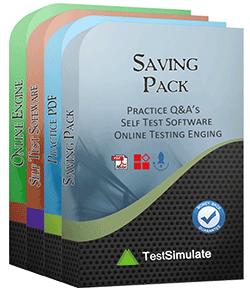
Our Online Test Engine & Self Test Software of TestSimulate 701-100日本語 actual study materials can simulate the exam scene so that you will have a good command of writing speed and time. Then multiple practices make you perfect while in the real Lpi 701-100日本語 exam. The package practice version will not only provide you high-quality 701-100日本語 exam preparation materials but also various studying ways.
100% Money Back Guarantee
TestSimulate has an unprecedented 99.6% first time pass rate among our customers.  We're so confident of our products that we provide no hassle product exchange.
- Best exam practice material
- Three formats are optional
- 10 years of excellence
- 365 Days Free Updates
- Learn anywhere, anytime
- 100% Safe shopping experience
- Instant Download: Our system will send you the products you purchase in mailbox in a minute after payment. (If not received within 12 hours, please contact us. Note: don't forget to check your spam.)
Lpi 701-100日本語 Practice Q&A's

- Printable 701-100日本語 PDF Format
- Prepared by 701-100日本語 Experts
- Instant Access to Download
- Study Anywhere, Anytime
- 365 Days Free Updates
- Free 701-100日本語 PDF Demo Available
- Download Q&A's Demo
Lpi 701-100日本語 Online Engine

- Online Tool, Convenient, easy to study.
- Instant Online Access
- Supports All Web Browsers
- Practice Online Anytime
- Test History and Performance Review
- Supports Windows / Mac / Android / iOS, etc.
- Try Online Engine Demo
Lpi 701-100日本語 Self Test Engine

- Installable Software Application
- Simulates Real Exam Environment
- Builds 701-100日本語 Exam Confidence
- Supports MS Operating System
- Two Modes For Practice
- Practice Offline Anytime
- Software Screenshots
Lpi 701-100日本語 Exam Syllabus Topics:
| Topic | Details |
|---|---|
| Topic 1 |
|
| Topic 2 |
|
| Topic 3 |
|
| Topic 4 |
|
| Topic 5 |
|
| Topic 6 |
|
| Topic 7 |
|
| Topic 8 |
|
| Topic 9 |
|
| Topic 10 |
|
| Topic 11 |
|
Reference: https://www.lpi.org/our-certifications/exam-701-objectives
Target Audience for 701-100 Exam?
This test is designed for individuals who want to develop their skills in the DevOps and want to learn about the tools used for its implementation. It also includes dealing with the IT professionals who are working in the DevOps field and want to enhance their knowledge more. There is no formal prerequisite for such an exam but it is recommended that you should have expertise in the field or the LPIC-1 or Developer certification to take the official test with ease.
As everyone knows that our Lpi 701-100日本語 key content materials with high passing rate can help users clear exam mostly. Our passing rate is reaching to 99.49%. We are a professional website selling professional key content about 701-100日本語 training materials. Through we have PDF version, our main products is selling software products. Most buyers may know that 701-100日本語 test simulates products are more popular: Online Enging version & Self Test Software version which can simulate the real exam scene. If you want to purchase best 701-100日本語 Training Materials, we advise you to choose our test simulate products.
However many examinees may wonder the difference between Online Enging version & Self Test Software version and how to choose the version of 701-100日本語 Test Simulates. Generally speaking, both of them are test engine. Comparing to PDF version which may be printed out and used on paper, these two versions of 701-100日本語 Test Simulates should be used on electronic device. You can not only obtain the key content materials from 701-100日本語 Test Simulates but also keep you good mood by simulating the real test scenes and practicing time after time.
Online Enging version of 701-100日本語 Test Simulates is named as Online enging. As the name suggests, this version should be downloaded and installed on personal computer which should be running on Window and Java System. Some candidates may find 701-100日本語 Test Simulates unavailable after purchasing. Maybe you should download and run Java system. After finishing payment, Online Enging version of 701-100日本語 Test Simulates can be downloaded and installed any computer as you like. Our software does not have limits for the quantity of computer and the loading time you will load in. Also after downloading and installing, you can copy 701-100日本語 Test Simulates to any other device as you like and use it offline.
Self Test Software version of 701-100日本語 Test Simulates can simulate the real test scenes like Online enging version. The difference from Online enging is that it can be used on any device because it is operating based on web browser. If you are Mac computer or if you want to use on Mobile phone or IPad, you should choose Self Test Software version of 701-100日本語 Test Simulates. Normally it should be operating online for the first time, if you do not clear cache, you can prepare 701-100日本語 Key Content offline the second times.
The test engine is a progressive study tool which is useful and convenient for learners so that our 701-100日本語 test simulates is acceptable for most buyers. Of course, if you get used to studying on paper, PDF version has same key contest materials of 701-100日本語. Besides, we provide excellent before-sale and after-sale service support for all learners who are interested in our 701-100日本語 training materials. 7*24*365 online service: you don't need to worry about time difference or different holidays as our customers are from all over the world. You can always get our support aid in time. If you want to know more service terms about Lpi 701-100日本語 Key Content materials like our "365 Days Free Updates Download" and "Money Back Guaranteed", we are pleased to hear from you any time.
What Are Domains Covered by LPI 701-100 Exam?
If you are planning to take 701-100 exam soon, you have to make sure you hold working experience in DevOps-related domains and have expertise in open-source utilities such as Vagrant, Puppet and Git, etc. To fully master such a test, you have to go through these below-covered objectives:
- Service Operations;
- Container Management.
- Software Engineering;
- Machine Deployment;
- Configuration Management;
Topics of LPI 701-100: LPIC-OT Exam 701: DevOps Tools Engineer Exam
To know the course content so that aspirants can prepare for the exam is a must. 700-100 exam dumps and 700-100 practice exams will include the following topics:
Modern Software Development
Candidates should be able to design software solutions suitable for modern runtime environments. Candidates should understand how services handle data persistence, sessions, status information, transactions, concurrency, security, performance, availability, scaling, load balancing, messaging, monitoring and APIs. Furthermore, candidates should understand the implications of agile and DevOps on software development.
Understand common application security risks and ways to mitigate them
Understand the concept of agile software development
Understand the concept of DevOps and its implications for software developers and operators
Understand and design service based applications
Awareness of risks in the migration and integration of monolithic legacy software
Understand common API concepts and standards
Design software to be run in containers
Understand aspects of data storage, service status and session handling
Design software to be deployed to cloud services
Container Usage
Description: Candidates should be able to build, share and operate Docker containers. This includes creating Dockerfiles, using a Docker registry, creating and interacting with containers as well as connecting containers to networks and storage volumes. This objective covers the feature set of Docker version 17.06 or later.
Operate and access Docker containers
Upload images to a Docker registry
Connect container to Docker networks
Use Docker volumes for shared and persistent container storage
Understand the Docker architecture
Create Dockerfiles and build images from Dockerfiles
Use existing Docker images from a Docker registry
Container Deployment and Orchestration
Description: Candidates should be able to run and manage multiple containers that work together to provide a service. This includes the orchestration of Docker containers using Docker Compose in conjunction with an existing Docker Swarm cluster as well as using an existing Kubernetes cluster. This objective covers the feature sets of Docker Compose version 1.14 or later, Docker Swarm included in Docker 17.06 or later and Kubernetes 1.6 or later.
Run containers in a Docker Swarm, including the definition of services, stacks and the usage of secrets
Understand the architecture and functionality of Docker Swarm mode
Define and manage a container-based application for Kubernetes, including the definition of Deployments, Services, ReplicaSets and Pods
Create and run Docker Compose Files (version 3 or later)
Understand the architecture and application model Kubernetes
Understand the application model of Docker Compose
Container Infrastructure
Description: Candidates should be able to set up a runtime environment for containers. This includes running containers on a local workstation as well as setting up a dedicated container host. Furthermore, candidates should be aware of other container infrastructures, storage, networking and container specific security aspects. This objective covers the feature set of Docker version 17.06 or later and Docker Machine 0.12 or later.
Create and manage Docker volumes
Understand Docker storage concepts
Understand Docker networking concepts, including overlay networks
Understand the concepts of service discovery
Create and manage Docker networks
Use Docker Machine to setup a Docker host
Basic feature knowledge of CoreOS Container Linux, rkt and etcd
Understand the security risks of container virtualization and container images and how to mitigate them
Awareness of Flocker and flannel
Configuration Management
Candidates should be able to use Ansible to ensure a target server is in a specific state regarding its configuration and installed software. This objective covers the feature set of Ansible version 2.2 or later.
Awareness of Ansibles features for non-Linux systems
Understand and use important Ansible tasks, including file, copy, template, ini_file, lineinfile, patch, replace, user, group, command, shell, service, systemd, cron, apt, debconf, yum, git, and debug
Understand and use Ansible roles and install Ansible roles from Ansible Galaxy
Create, maintain and run Ansible playbooks, including tasks, handlers, conditionals, loops and registers
Create and maintain inventory files
Write Jinja2 templates, including using common filters, loops and conditionals
Understand the principles of automated system configuration and software installation
Awareness of Ansible containers
Understand how Ansible interacts with remote systems
Awareness of dynamic inventory
Maintain secrets using Ansible vaults
Set and use variables
Manage SSH login credentials for Ansible, including using unprivileged login accounts
 Angela
Constance
Evangeline
Janice
Mabel
Nina
Salome
TestSimulate is the world's largest certification preparation company with 99.6% Pass Rate History from 73387+ Satisfied Customers in 148 Countries.

Over 73387+ Satisfied Customers