Download ISC : HCISPP Questions & Answers as PDF & Test Software
Last Updated: Jun 13, 2026
No. of Questions: 308 Questions & Answers with Testing Engine
Download Limit: Unlimited
Reliable & Actual Study Materials for HCISPP Exam Success
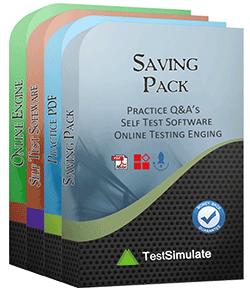
Our Online Test Engine & Self Test Software of TestSimulate HCISPP actual study materials can simulate the exam scene so that you will have a good command of writing speed and time. Then multiple practices make you perfect while in the real ISC HCISPP exam. The package practice version will not only provide you high-quality HCISPP exam preparation materials but also various studying ways.
100% Money Back Guarantee
TestSimulate has an unprecedented 99.6% first time pass rate among our customers.  We're so confident of our products that we provide no hassle product exchange.
- Best exam practice material
- Three formats are optional
- 10 years of excellence
- 365 Days Free Updates
- Learn anywhere, anytime
- 100% Safe shopping experience
- Instant Download: Our system will send you the products you purchase in mailbox in a minute after payment. (If not received within 12 hours, please contact us. Note: don't forget to check your spam.)
ISC HCISPP Practice Q&A's

- Printable HCISPP PDF Format
- Prepared by HCISPP Experts
- Instant Access to Download
- Study Anywhere, Anytime
- 365 Days Free Updates
- Free HCISPP PDF Demo Available
- Download Q&A's Demo
ISC HCISPP Online Engine

- Online Tool, Convenient, easy to study.
- Instant Online Access
- Supports All Web Browsers
- Practice Online Anytime
- Test History and Performance Review
- Supports Windows / Mac / Android / iOS, etc.
- Try Online Engine Demo
ISC HCISPP Self Test Engine

- Installable Software Application
- Simulates Real Exam Environment
- Builds HCISPP Exam Confidence
- Supports MS Operating System
- Two Modes For Practice
- Practice Offline Anytime
- Software Screenshots
As everyone knows that our ISC HCISPP key content materials with high passing rate can help users clear exam mostly. Our passing rate is reaching to 99.49%. We are a professional website selling professional key content about HCISPP training materials. Through we have PDF version, our main products is selling software products. Most buyers may know that HCISPP test simulates products are more popular: Online Enging version & Self Test Software version which can simulate the real exam scene. If you want to purchase best HCISPP Training Materials, we advise you to choose our test simulate products.
However many examinees may wonder the difference between Online Enging version & Self Test Software version and how to choose the version of HCISPP Test Simulates. Generally speaking, both of them are test engine. Comparing to PDF version which may be printed out and used on paper, these two versions of HCISPP Test Simulates should be used on electronic device. You can not only obtain the key content materials from HCISPP Test Simulates but also keep you good mood by simulating the real test scenes and practicing time after time.
Online Enging version of HCISPP Test Simulates is named as Online enging. As the name suggests, this version should be downloaded and installed on personal computer which should be running on Window and Java System. Some candidates may find HCISPP Test Simulates unavailable after purchasing. Maybe you should download and run Java system. After finishing payment, Online Enging version of HCISPP Test Simulates can be downloaded and installed any computer as you like. Our software does not have limits for the quantity of computer and the loading time you will load in. Also after downloading and installing, you can copy HCISPP Test Simulates to any other device as you like and use it offline.
Self Test Software version of HCISPP Test Simulates can simulate the real test scenes like Online enging version. The difference from Online enging is that it can be used on any device because it is operating based on web browser. If you are Mac computer or if you want to use on Mobile phone or IPad, you should choose Self Test Software version of HCISPP Test Simulates. Normally it should be operating online for the first time, if you do not clear cache, you can prepare HCISPP Key Content offline the second times.
The test engine is a progressive study tool which is useful and convenient for learners so that our HCISPP test simulates is acceptable for most buyers. Of course, if you get used to studying on paper, PDF version has same key contest materials of HCISPP. Besides, we provide excellent before-sale and after-sale service support for all learners who are interested in our HCISPP training materials. 7*24*365 online service: you don't need to worry about time difference or different holidays as our customers are from all over the world. You can always get our support aid in time. If you want to know more service terms about ISC HCISPP Key Content materials like our "365 Days Free Updates Download" and "Money Back Guaranteed", we are pleased to hear from you any time.
ISC2 HCISPP Exam Syllabus Topics:
| Topic | Details |
|---|---|
Healthcare Industry (12%) | |
| Understand the Healthcare Environment Components | - Types of Organizations in the Healthcare Sector (e.g., providers, pharma, payers) - Health Insurance (e.g., claims processing, payment models, health exchanges, clearing houses) - Coding (e.g., Systematized Nomenclature of Medicine Clinical Terms (SNOMED CT), International Classification of Diseases (ICD) 10) - Revenue Cycle (i.e., billing, payment, reimbursement) - Workflow Management - Regulatory Environment - Public Health Reporting - Clinical Research (e.g., processes) - Healthcare Records Management |
| Understand Third-Party Relationships | - Vendors - Business Partners - Regulators - Other Third-Party Relationships |
| Understand Foundational Health Data Management Concepts | - Information Flow and Life Cycle in the Healthcare Environments - Health Data Characterization (e.g., classification, taxonomy, analytics) - Data Interoperability and Exchange (e.g., Health Level 7 (HL7), International Health Exchange (IHE), Digital Imaging and Communications in Medicine (DICOM)) - Legal Medical Records |
Information Governance in Healthcare (5%) | |
| Understand Information Governance Frameworks | - Security Governance (e.g., charters, roles, responsibilities) - Privacy Governance (e.g., charters, roles, responsibilities) |
| Identify Information Governance Roles and Responsibilities | |
| Align Information Security and Privacy Policies, Standards and Procedures | - Policies - Standards - Processes and Procedures |
| Understand and Comply with Code of Conduct/Ethics in a Healthcare Information Environment | - Organizational Code of Ethics - (ISC)² Code of Ethics |
Information Technologies in Healthcare (8%) | |
| Understand the Impact of Healthcare Information Technologies on Privacy and Security | - Increased Exposure Affecting Confidentiality, Integrity and Availability (e.g., threat landscape) - Oversight and Regulatory Challenges - Interoperability - Information Technologies |
| Understand Data Life Cycle Management (e.g., create, store, use, share, archive, destroy) | |
| Understand Third-Party Connectivity | - Trust Models for Third-Party Interconnections - Technical Standards (e.g., physical, logical, network connectivity) - Connection Agreements (e.g., Memorandum of Understanding (MOU), Interconnection Security Agreements (ISAs)) |
Regulatory and Standards Environment (15%) | |
| Identify Regulatory Requirements | - Legal Issues that Pertain to Information Security and Privacy for Healthcare Organizations - Data Breach Regulations - Protected Personal and Health Information (e.g., Personally Identifiable Information (PII), Personal Health Information (PHI)) - Jurisdiction Implications - Data Subjects - Research |
| Recognize Regulations and Controls of Various Countries | - Treaties - Laws and Regulations (e.g., European Union (EU) Data Protection Directive, Health Insurance Portability and Accountability Act /Health Information Technology for Economic and Clinical Health (HIPAA/HITECH), General Data Protection Regulation (GDPR), Personal Information Protection and Electronic Documents Act (PIPEDA)) |
| Understand Compliance Frameworks | - Privacy Frameworks (e.g., Organization for Economic Cooperation and Development (OECD) Privacy principles, Asia-Pacific Economic Cooperation (APEC), Generally Accepted Privacy Principles (GAPP)) - Security Frameworks (e.g., International Organization for Standardization (ISO), National Institute of Standards and Technology (NIST), Common Criteria (CC)) |
Privacy and Security in Healthcare (25%) | |
| Understand Security Objectives/Attributes | - Confidentiality - Integrity - Availability |
| Understand General Security Definitions and Concepts | - Identity and Access Management (IAM) - Data Encryption - Training and Awareness - Logging, Monitoring and Auditing - Vulnerability Management - Segregation of Duties - Least Privilege (Need to Know) - Business Continuity (BC) - Disaster Recovery (DR) - System Backup and Recovery |
| Understand General Privacy Definitions and Concepts | - Consent/Choice - Limited Collection/Legitimate Purpose/Purpose Specification - Disclosure Limitation/Transfer to Third-Parties/ Trans-border Concerns - Access Limitation - Accuracy, Completeness and Quality - Management, Designation of Privacy Officer, Supervisor Re-authority, Processing Authorization and Accountability - Training and Awareness - Transparency and Openness (e.g., notice of privacy practices) - Proportionality, Use and Disclosure, and Use Limitation - Access and Individual Participation - Notice and Purpose Specification - Events, Incidents and Breaches |
| Understand the Relationship Between Privacy and Security | - Dependency - Integration |
| Understand Sensitive Data and Handling | - Sensitivity Mitigation (e.g., de-identification, anonymization) - Categories of Sensitive Data (e.g., behavioral health) |
Risk Management and Risk Assessment (20%) | |
| Understand Enterprise Risk Management | - Information Asset Identification - Asset Valuation - Exposure - Likelihood - Impact - Threats - Vulnerability - Risk - Controls - Residual Risk - Acceptance |
| Understand Information Risk Management Framework (RMF) (e.g., International Organization for Standardization (ISO), National Institute of Standards and Technology (NIST)) | |
| Understand Risk Management Process | - Definition - Approach (e.g., qualitative, quantitative) - Intent - Life Cycle/Continuous Monitoring - Tools/Resources/Techniques - Desired Outcomes - Role of Internal and External Audit/Assessment |
| Identify Control Assessment Procedures Utilizing Organization Risk Frameworks | |
| Participate in Risk Assessment Consistent with the Role in Organization | - Information Gathering - Risk Assessment Estimated Timeline - Gap Analysis |
| Understand Risk Response (e.g., corrective action plan) | - Mitigating Actions - Avoidance - Transfer - Acceptance - Communications and Reporting |
| Utilize Controls to Remediate Risk (e.g., preventative, detective, corrective) | - Administrative - Physical - Technical |
| Participate in Continuous Monitoring | |
Third-Party Risk Management (15%) | |
| Understand the Definition of Third-Parties in Healthcare Context | |
| Maintain a List of Third-Party Organizations | - Third-Party Role/Relationship with the Organization - Health Information Use (e.g., processing, storage, transmission) |
| Apply Management Standards and Practices for Engaging Third-Parties | - Relationship Management |
| Determine When a Third-Party Assessment Is Required | - Organizational Standards - Triggers of a Third-Party Assessment |
| Support Third-Party Assessments and Audits | - Information Asset Protection Controls - Compliance with Information Asset Protection Controls - Communication of Results |
| Participate in Third-Party Remediation Efforts | - Risk Management Activities - Risk Treatment Identification - Corrective Action Plans - Compliance Activities Documentation |
| Respond to Notifications of Security/Privacy Events | - Internal Processes for Incident Response - Relationship Between Organization and Third-Party Incident Response - Breach Recognition, Notification and Initial Response |
| Respond to Third-Party Requests Regarding Privacy/Security Events | - Organizational Breach Notification Rules - Organizational Information Dissemination Policies and Standards - Risk Assessment Activities - Chain of Custody Principles |
| Promote Awareness of Third-Party Requirements | - Information Flow Mapping and Scope - Data Sensitivity and Classification - Privacy and Security Requirements - Risks Associated with Third-Parties |
Reference: https://www.isc2.org/Certifications/HCISPP
 Teresa
Adair
Barlow
Burnell
Derrick
Gary
Isaac
TestSimulate is the world's largest certification preparation company with 99.6% Pass Rate History from 73387+ Satisfied Customers in 148 Countries.

Over 73387+ Satisfied Customers