Download CompTIA : N10-006 Questions & Answers as PDF & Test Software
Last Updated: Jun 05, 2026
No. of Questions: 880 Questions & Answers with Testing Engine
Download Limit: Unlimited
Reliable & Actual Study Materials for N10-006 Exam Success
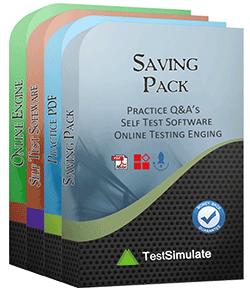
Our Online Test Engine & Self Test Software of TestSimulate N10-006 actual study materials can simulate the exam scene so that you will have a good command of writing speed and time. Then multiple practices make you perfect while in the real CompTIA N10-006 exam. The package practice version will not only provide you high-quality N10-006 exam preparation materials but also various studying ways.
100% Money Back Guarantee
TestSimulate has an unprecedented 99.6% first time pass rate among our customers.  We're so confident of our products that we provide no hassle product exchange.
- Best exam practice material
- Three formats are optional
- 10 years of excellence
- 365 Days Free Updates
- Learn anywhere, anytime
- 100% Safe shopping experience
- Instant Download: Our system will send you the products you purchase in mailbox in a minute after payment. (If not received within 12 hours, please contact us. Note: don't forget to check your spam.)
CompTIA N10-006 Practice Q&A's

- Printable N10-006 PDF Format
- Prepared by N10-006 Experts
- Instant Access to Download
- Study Anywhere, Anytime
- 365 Days Free Updates
- Free N10-006 PDF Demo Available
- Download Q&A's Demo
CompTIA N10-006 Online Engine

- Online Tool, Convenient, easy to study.
- Instant Online Access
- Supports All Web Browsers
- Practice Online Anytime
- Test History and Performance Review
- Supports Windows / Mac / Android / iOS, etc.
- Try Online Engine Demo
CompTIA N10-006 Self Test Engine

- Installable Software Application
- Simulates Real Exam Environment
- Builds N10-006 Exam Confidence
- Supports MS Operating System
- Two Modes For Practice
- Practice Offline Anytime
- Software Screenshots
CompTIA N10-006 Exam Topics:
| Section | Objectives |
| Network Architecture 22% | |
| Explain the functions and applications of various network devices. | 1.Router 2. Switch 3.Multilayer switch 4. Firewall 5. HIDS 6. IDS/IPS 7. Access point (wireless/wired) 8.Content filter 9.Load balancer 10.Hub 11.Analog modem 12.Packet shaper 13.VPN concentrator |
| Compare and contrast the use of networking services and applications. | 1.VPN
3.RAS 4.Web services 5.Unified voice services 6.Network controllers |
| Install and configure the following networking services/applications. | 1.DHCP
4.NAT
|
| Explain the characteristics and benefits of various WAN technologies. | 1.Fiber
3.Satellite 4.Broadband cable 5.DSL/ADSL 6. ISDN 7.ATM 8.PPP/multilink PPP 9.MPLS 10.GSM/CDMA
12.WiMAX 13.MetroEthernet 14.Leased lines
|
| Install and properly terminate various cable types and connectors using appropriate tools. | 1.Copper connectors
|
| Differentiate between common network topologies. | 1. Mesh
4.Star 5.Hybrid 6. Point-to-point 7.Point-to-multipoint 8. Client-server 9.Peer-to-peer |
| Differentiate between network infrastructure implementations. | 1.WAN 2.MAN 3.LAN 4.WLAN
5.PAN
|
| Given a scenario, implement and configure the appropriate addressing schema. | 1.IPv6
4.NAT/PAT 5.MAC addressing 6.Multicast 7.Unicast 8.Broadcast 9.Broadcast domains vs. collision domains |
| Explain the basics of routing concepts and protocols. | 1.Loopback interface 2.Routing loops 3.Routing tables 4.Static vs. dynamic routes 5.Default route 6.Distance vector routing protocols
7.Hybrid routing protocols
8.Link state routing protocols
10.Autonomous system numbers 11.Route redistribution 12.High availability
14.Routing metrics
|
| Identify the basics elements of unified communication technologies. | 1. VoIP 2.Video 3.Real-time services
|
| Compare and contrast technologies that support cloud and virtualization. | 1.Virtualization
|
| Given a set of requirements, implement a basic network. | 1. List of requirements 2.Device types/requirements 3.Environment limitations 4.Equipment limitations 5.Compatibility requirements 6.Wired/wireless considerations 7.Security considerations |
| Network Operations 20% | |
| Given a scenario, use appropriate monitoring tools. | 1.Packet/network analyzer 2.Interface monitoring tools 3.Port scanner 4.Top talkers/listeners 5.SNMP management software
8.SYSLOG 9.SIEM 10.Environmental monitoring tools
12.Wireless survey tools 13.Wireless analyzers |
| Given a scenario, analyze metrics and reports from monitoring and tracking performance tools. | 1.Baseline 2.Bottleneck 3.Log management 4.Graphing 5.Utilization
7.Interface monitoring
|
| Given a scenario, use appropriate resources to support configuration management. | 1.Archives/backups 2.Baselines 3. On-boarding and off-boarding of mobile devices 4.NAC 5.Documentation
|
| Explain the importance of implementing network segmentation. | 1.SCADA systems/industrial control systems 2.Legacy systems 3.Separate private/public networks 4.Honeypot/honeynet 5.Testing lab 6.Load balancing 7.Performance optimization 8.Security 9.Compliance |
| Given a scenario, install and apply patches and updates. | 1.OS updates 2.Firmware updates 3.Driver updates 4.Feature changes/updates 5.Major vs. minor updates 6.Vulnerability patches 7.Upgrading vs. downgrading
|
| Given a scenario, configure a switch using proper features. | 1.VLAN
5.PoE and PoE+ (802.3af, 802.3at) 6.Switch management
|
| Install and configure wireless LAN infrastructure and implement the appropriate technologies in support of wireless capable devices. | 1.Small office, home office wireless router 2.Wireless access points
4.Site surveys
7.Goodput 8.Connection types
10.Antenna types
12.Signal strength
14.Topologies
|
| Network Security 18% | |
| Compare and contrast risk related concepts. | 1. Disaster recovery2. Business continuity 3. Battery backups/UPS 4. First responders 5. Data breach 6.End user awareness and training 7.Single point of failure
9.Vulnerability scanning 10.Penetration testing |
| Compare and contrast common network vulnerabilities and threats. | 1.Attacks/threats
|
| Given a scenario, implement network hardening techniques. | 1.Anti-malware software
4.Disable unneeded network services 5.Use secure protocols
|
| Compare and contrast physical security controls. | 1.Mantraps 2.Network closets 3.Video monitoring
4.Door access controls |
| Given a scenario, install and configure a basic firewall. | 1.Types of firewalls
|
| Explain the purpose of various network access control models. | 1. 802.1x2. Posture assessment 3. Guest network 4. Persistent vs. non-persistent agents 5. Quarantine network 6. Edge vs. access control |
| Summarize basic forensic concepts. | 1. First responder2. Secure the area
4. eDiscovery 5. Evidence/data collection 6. Chain of custody 7. Data transport 8. Forensics report 9. Legal hold |
| Troubleshooting 24% | |
| Given a scenario, implement the following network troubleshooting methodology. | 1.Identify the problem
5. Implement the solution or escalate as necessary 6. Verify full system functionality and, if applicable, implement preventative measures 7. Document findings, actions and outcomes |
| Given a scenario, analyze and interpret the output of troubleshooting tools. | 1.Command line tools
3. Certifiers 4. Multimeter 5. Cable tester 6. Light meter 7. Toner probe 8. Speed test sites 9. Looking glass sites 10. WiFi analyzer 11. Protocol analyzer |
| Given a scenario, troubleshoot and resolve common wireless issues. | 1. Signal loss2. Interference 3. Overlapping channels
5. Device saturation 6.Untested updates 7. Wrong SSID 8. Power levels 9. Open networks 10. Rogue access point 11. Wrong antenna type 12. Incompatibilities 13. Wrong encryption 14. Bounce 15.MIMO 16. AP placement 17. AP configurations
|
| Given a scenario, troubleshoot and resolve common copper cable issues. | 1. Shorts2. Opens 3. Incorrect termination (mismatched standards)
6. Distance limitations 7. Attenuation/Db loss 8. Bad connector 9. Bad wiring 10. Split pairs 11. Tx/Rx reverse 12. Cable placement 13. Bad SFP/GBIC - cable or transceiver |
| Given a scenario, troubleshoot and resolve common fiber cable issues. | 1. Attenuation/Db loss2. SFP/GBIC - cable mismatch 3. Bad SFP/GBIC - cable or transceiver 4. Wavelength mismatch 5. Fiber type mismatch 6. Dirty connectors 7. Connector mismatch 8. Bend radius limitations 9. Distance limitations |
| Given a scenario, troubleshoot and resolve common network issues. | 1. Incorrect IP configuration/default gateway2. Broadcast storms/switching loop 3. Duplicate IP 4. Speed and duplex mismatch 5. End-to-end connectivity 6. Incorrect VLAN assignment 7. Hardware failure 8. Misconfigured DHCP 9.Misconfigured DNS 10 Incorrect interface/interface misconfiguration 11. Cable placement 12. Interface errors 13. Simultaneous wired/wireless connections 14. Discovering neighboring devices/nodes 15. Power failure/power anomalies 16.MTU/MTU black hole 17. Missing IP routes 18. NIC teaming misconfiguration
|
| Given a scenario, troubleshoot and resolve common security issues. | 1. Misconfigured firewall2.Misconfigured ACLs/applications 3. Malware 4.DoS 5. Open/closed ports 6.ICMP-related issues
8. Malicious users
11. ARP issues 12. Banner grabbing/OUI/TCP ports 13. Domain/local group configurations 14. Jamming |
| Given a scenario, troubleshoot and resolve common WAN issues. | 1. Loss of Internet connectivity2. Interface errors 3. Split horizon 4. DNS issues 5. Interference 6. Router configurations 7.Customer premise equipment
|
| Industry Standards, Practices and Network Theory 16% | |
| Analyze a scenario and determine the corresponding OSI layer. | 1. Layer 1 – Physical 2. Layer 2 – Data link 3. Layer 3 – Network 4. Layer 4 – Transport 5. Layer 5 – Session 6. Layer 6 – Presentation 7. Layer 7 – Application |
| Explain the basics of network theory and concepts. | 1. Encapsulation/de-encapsulation2. Modulation techniques
5. Bit rates vs. baud rates 6. Sampling size 7. CDMA 8. CSMA/CD and CSMA/CA 9. Carrier detect/sense 10. Wavelength 11. TCP/IP suite
|
| Given a scenario, deploy the appropriate wireless standard. | 1. 802.11a2. 802.11b 3. 802.11g 4. 802.11n 5. 802.11ac |
| Given a scenario, deploy the appropriate wired connectivity standard. | 1.Ethernet standards
|
| Given a scenario, implement the appropriate policies or procedures. | 1.Security policies
2.Network policies
|
| Summarize safety practices. | 1.Electrical safety
2.ESD
3.Installation safety
5. Emergency procedures
7. HVAC |
| Given a scenario, install and configure equipment in the appropriate location using best practices. | 1. Intermediate distribution frame2. Main distribution frame 3. Cable management
6. Air flow 7. Cable trays 8. Rack systems
11. Rack security |
| Explain the basics of change management procedures. | 1.Document reason for a change 2.Change request
4.Maintenance window
6.Documentation
|
| Compare and contrast the following ports and protocols. | 1. 80 HTTP 2. 443 HTTPS 3. 137-139 NetBIOS 4. 110 POP 5. 143 IMAP 6. 25 SMTP 7. 5060/5061 SIP 8. 2427/2727 MGCP 9. 5004/5005 RTP 10. 1720 H.323 11. TCP
|
| Given a scenario, configure and apply the appropriate ports and protocols. | 1. 20,21 FTP2. 161 SNMP 3. 22 SSH 4. 23 Telnet 5. 53 DNS 6. 67,68 DHCP 7. 69 TFTP 8. 445 SMB 9. 3389 RDP |
We have introduced too much details about our N10-006 test simulates: CompTIA Network+ certification on the other page about Self Test Software & Online Enging. If learners are interested in our N10-006 study guide and hard to distinguish, we are pleased to tell you alone. Below we will focus on your benefits if you become our users.
Firstly, we want to stress that our N10-006 test simulates: CompTIA Network+ certification are valid as we are researching CompTIA exams many years. Most our experts are experienced and familiar with the real questions in past ten years. We know the key knowledge materials about N10-006 exam so that we can always compile valid exam study guide. We are skilled at CompTIA exams with so many years' development. We have stable & high passing rate for CompTIA exams recent years. If you pay attention on our exam study guide after purchasing, you should not worry too much, our products will assist you to clear exam easily. We will assist you to prepare well until you pass exam.
Secondly, our products are high-quality. Our value is obvious to all:
1. PDF version of N10-006 study guide is available for you to print out and note your studying thoughts on paper. Self Test Software and Online Enging of N10-006 study guide have simulation functions which is not only easy for you to master our questions and answers better but also make you familiar with exam mood so that you will be confident.
2. Our N10-006 test simulates materials make you do sharp and better target preparation for your real exam. This ways will cut off your preparation time. Your learning will be proficient.
3. One-shot pass with help of our N10-006 test simulates materials will make you save a lot of time and energy. As exam fee is expensive, you may not want to pay twice or more.
4. 365 Days Free Updates Download: you will not miss our valid N10-006 study guide, and also you don't have to worry about your exam plan. One year is enough for you to do everything.
Thirdly, About Payment & Refund: we only support Credit Card for most countries. Our purchasing procedure of N10-006 test simulates materials is surely safe. If you find any unusual or extra tax & fee please contact us soon. Our promise is "Money Back Guaranteed". Please rest assured. We are legal authoritative company. If you fail exam unluckily and apply for refund, we will refund to you soon. You are not allowed to waste one penny on useless products.
Fourthly, About Discount: as we put into much money on information resources and R&D, all our experts are highly educated and skilled so that our N10-006 test simulates materials receive recognition with its high pass-rate from peers and users. Our price is really reasonable. If you really want some discount, you can pay attention on holiday activities. Or if you are regular customers and introduce our N10-006 study guide to others we will give you some discount.
CompTIA N10-006 Exam Certification Details:
| Number of Questions | 90 |
| Exam Price | $294 USD |
| Sample Questions | CompTIA N10-006 Sample Questions |
| Recommended Training | CompTIA Network+ Training |
| Exam Name | Network+ |
| Exam Registration | PEARSON VUE |
| Duration | 90 minutes |
| Passing Score | 720/900 |
| Exam Code | N10-006 N+ |
Reference: https://certification.comptia.org/certifications/network
Over 73313+ Satisfied Customers
 Basil
Basil
Cash
Duke
Glenn
Jay
Lyndon
Norton
TestSimulate is the world's largest certification preparation company with 99.6% Pass Rate History from 73313+ Satisfied Customers in 148 Countries.