Download Cisco : 400-201 Questions & Answers as PDF & Test Software
Last Updated: Jun 11, 2026
No. of Questions: 700 Questions & Answers with Testing Engine
Download Limit: Unlimited
Reliable & Actual Study Materials for 400-201 Exam Success
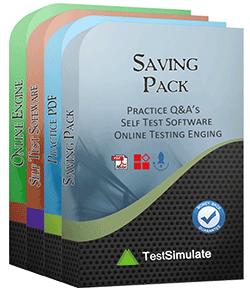
Our Online Test Engine & Self Test Software of TestSimulate 400-201 actual study materials can simulate the exam scene so that you will have a good command of writing speed and time. Then multiple practices make you perfect while in the real Cisco 400-201 exam. The package practice version will not only provide you high-quality 400-201 exam preparation materials but also various studying ways.
100% Money Back Guarantee
TestSimulate has an unprecedented 99.6% first time pass rate among our customers.  We're so confident of our products that we provide no hassle product exchange.
- Best exam practice material
- Three formats are optional
- 10 years of excellence
- 365 Days Free Updates
- Learn anywhere, anytime
- 100% Safe shopping experience
- Instant Download: Our system will send you the products you purchase in mailbox in a minute after payment. (If not received within 12 hours, please contact us. Note: don't forget to check your spam.)
Cisco 400-201 Practice Q&A's

- Printable 400-201 PDF Format
- Prepared by 400-201 Experts
- Instant Access to Download
- Study Anywhere, Anytime
- 365 Days Free Updates
- Free 400-201 PDF Demo Available
- Download Q&A's Demo
Cisco 400-201 Online Engine

- Online Tool, Convenient, easy to study.
- Instant Online Access
- Supports All Web Browsers
- Practice Online Anytime
- Test History and Performance Review
- Supports Windows / Mac / Android / iOS, etc.
- Try Online Engine Demo
Cisco 400-201 Self Test Engine

- Installable Software Application
- Simulates Real Exam Environment
- Builds 400-201 Exam Confidence
- Supports MS Operating System
- Two Modes For Practice
- Practice Offline Anytime
- Software Screenshots
Cisco 400-201 Exam Topics:
| Section | Weight | Objectives |
|---|---|---|
| High Availability and Fast Convergence | 14% | 1. System level HA a) Describe Multichassis/clustering HA b) Describe, implement, and troubleshoot SS0/NSF, NSR, and GR c) Describe, implement, and troubleshoot IGP-LDP Sync d) Describe, implement, and troubleshoot LDP Session Protection 2. Layer 1/2/3 failure detection techniques a) Describe Layer 1 failure detection b) Describe, implement, and troubleshoot Layer 2 failure detection c) Describe, implement, and troubleshoot Layer 3 failure detection 3. Routing/fast convergence a) Describe, implement, and optimize IGP convergence b) Describe, implement, and optimize BGP convergence c) Describe, implement, and optimize IP FRR and MPLS TE FRR |
| Access and Aggregation | 18% | 1. Transport and encapsulation technologies a) Describe transport technologies, for example: optical, xDSL, DOCSIS, TDM, and GPON b) Describe Ethernet technologies c) Describe, implement, and troubleshoot link aggregation techniques 2. PE-CE connectivity a) Describe, implement, and troubleshoot PE-CE routing protocols, for example: static, OSPF, RIP, RIPng, EIGRP, ISIS, and BGP b) Describe, implement, and troubleshoot route redistribution c) Describe, implement, and troubleshoot route filtering d) Describe, implement, and troubleshoot loop prevention techniques in multihomed environments e) Describe, implement, and troubleshoot Multi-VRF CE 3. Quality of Service a) Describe, implement, and troubleshoot classification and marking b) Describe, implement, and troubleshoot congestion management and scheduling, for example: policing, shaping, and queuing c) Describe, implement, and troubleshoot congestion avoidance 4. Multicast a) Describe, implement, and troubleshoot IGMP and MLD b) Describe, implement, and troubleshoot PIM c) Describe, implement, and troubleshoot RP d) Describe and optimize multicast scale and performance |
| Evolving Technologies v1.1 | 10% | 1 Cloud a) Compare and contrast Cloud deployment models a) [i] Infrastructure, platform, and software services (XaaS) a) [ii] Performance and reliability a) [iii] Security and privacy a) [iv] Scalability and interoperability b) Describe Cloud implementations and operations b) [i] Automation and orchestration b) [ii] Workload mobility b) [iii] Troubleshooting and management b) [iv] OpenStack components 2 Network Programmability (SDN) a) Describe functional elements of network programmability (SDN) and how they interact a) [i] Controllers a) [ii] APIs a) [iii] Scripting a) [iv] Agents a) [v] Northbound vs. Southbound protocols b) Describe aspects of virtualization and automation in network environments b) [i] DevOps methodologies, tools and workflows b) [ii] Network/application function virtualization (NFV, AFV) b) [iii] Service function chaining b) [iv] Performance, availability, and scaling considerations 3 Internet of Things (IoT) a) Describe architectural framework and deployment considerations for Internet of Things a) [i] Performance, reliability and scalability a) [ii] Mobility a) [iii] Security and privacy a) [iv] Standards and compliance a) [v] Migration a) [vi] Environmental impacts on the network |
| Core Routing | 25% | 1. Interior Gateway Protocol a) Describe, implement, and troubleshoot IS-IS b) Describe, implement, and troubleshoot OSPFv2 and OSPFv3 c) Describe and optimize IGP scale and performance 2. Border Gateway Protocol a) Describe, implement, and troubleshoot IBGP, EBGP, and MP-BGP b) Describe, implement, and troubleshoot BGP route policy enforcement c) Describe BGP path attribute d) Describe and optimize BGP scale and performance e) Describe, implement, and troubleshoot advanced BGP features 3. Multiprotocol Label Switching a) Describe MPLS forwarding and control plane mechanisms b) Describe, implement, and troubleshoot LDP c) Describe and optimize LDP scale and performance 4. MPLS Traffic Engineering a) Describe, implement, and troubleshoot RSVP b) Describe, implement, and troubleshoot ISIS and OSPF extensions c) Describe, implement, and troubleshoot MPLS TE policy enforcement d) Describe MPLS TE attributes e) Describe and optimize MPLS TE scale and performance f) Describe, implement, and troubleshoot MPLS advanced features, for example: Segment Routing and MPLS-TE Inter-AS 5. Multicast a) Describe, implement, and troubleshoot PIM (PIM-SM, PIM-SSM, and PIM-BIDIR) b) Describe, implement, and troubleshoot RP (Auto-RP, BSR, Static, Anycast RP, and MSDP) c) Describe, implement, and troubleshoot mVPN d) Describe and optimize multicast scale and performance 6. Quality of Service a) Describe, implement, and troubleshoot classification and marking b) Describe, implement, and troubleshoot congestion management and scheduling c) Describe, implement, and troubleshoot congestion avoidance d) Describe, implement, and troubleshoot MPLS QoS models (Pipe, Short Pipe, and Uniform) e) Describe, implement, and troubleshoot MPLS TE QoS (MAM, RDM, CBTS, PBTS, and DS-TE) |
| Service Provider Architecture and Services | 21% | 1. Service provider architecture concepts a) Describe network architecture component and service provider network domains, for example: PE, P, CE, Metro Ethernet Core, Aggregation, RAN Backhaul, and eNodeB b) Describe Cisco IOS, Cisco IOS-XE, and Cisco IOS-XR software architecture components, for example: XR Kernel, System Manager, and Interprocess communication 2. Virtualization concepts a) Describe physical router virtualization, for example: SDR, Multiple-Logical-Routers, and Satellite Network Virtualization b) Describe Network Function Virtualization architecture concepts, for example: Service Function Chaining, ESP, EPN, and NFVI 3. Carrier Ethernet a) Describe, implement, and troubleshoot E-LINE, for example: VPWS b) Describe, implement, and troubleshoot E-LAN and E-TREE, for example: VPLS and H-VPLS c) Describe, implement, and troubleshoot EVPN d) Describe IEEE 802.1ad (Q-in-Q), IEEE 802.1ah (Mac-in-Mac), and ITU G.8032 (REP) 4. L3VPN a) Describe, implement, and troubleshoot L3VPN b) Describe, implement, and troubleshoot Inter-AS L3VPN c) Describe, implement, and troubleshoot multicast VPN d) Describe, implement, and troubleshoot unified MPLS and CSC e) Describe, implement, and troubleshoot shared services, for example: Extranet and Internet access 5. Overlay VPN a) Describe, implement, and troubleshoot L2TPv3 b) Describe LISP 6. Internet service a) Describe, implement, and troubleshoot IPv6 transition mechanism, for example: NAT44, NAT64, 6RD, MAP, and DS Lite b) Describe, implement, and troubleshoot Internet peering route and transit policy enforcement |
| Service Provider Security, Operation, and Management | 12% | 1. Control plane security a) Describe, implement, and troubleshoot control plane protection techniques, for example: LPTS and CoPP b) Describe, implement, and troubleshoot routing protocol security, for example: BGP-TTL security and protocol authentication c) Describe, implement, and troubleshoot BGP prefix suppression d) Describe, implement, and troubleshoot LDP security, for example: authentication and label allocation filtering e) Describe, implement, and troubleshoot BGP prefix based filtering f) Describe, implement, and troubleshoot BGPsec 2. Management plane security a) Describe, implement, and troubleshoot device management, for example: MPP, SSH, and VTY b) Describe, implement, and troubleshoot logging and SNMP security c) Describe backscatter Traceback 3. Infrastructure security a.)Describe, implement, and troubleshoot uRPF b) Describe Lawful-intercept c) Describe, implement, and troubleshoot iACL d) Describe, implement, and troubleshoot RTBH e) Describe, implement, and troubleshoot BGP Flowspec f) Describe DDoS mitigation techniques 4. Timing and synchronization a) Describe timing protocol, for example: NTP, 1588v2, and SyncE 5. Network monitoring and troubleshooting a) Describe, implement, and troubleshoot syslog and logging functions b) Describe, implement, and troubleshoot SNMP traps, RMON, EEM, and EPC c) Describe, implement, and troubleshoot NetFlow and IPFIX d) Describe, implement, and troubleshoot IP SLA e0 Describe, implement, and troubleshoot MPLS OAM and Ethernet OAM 6. Network configuration and change management a0 Describe configuration change, implementation, and rollback |
High level topics covered by our practice test
This Web Simulator is for Cisco network administrators that are ready to start building Network infrastructure and would like to take the 400-201 certification exam. The Web Simulator will enable candidates to bridge their core technology expertise with knowledge of the evolving technologies that are being adopted at an accelerated pace, such as cloud, IoT, and network programmability.
Cisco 400-201 Exam Certification Details:
| Sample Questions | Cisco 400-201 Sample Questions |
| Duration | 120 minutes |
| Exam Price | $450 USD |
| Exam Registration | PEARSON VUE |
| Exam Code | 400-201 CCIE SP |
| Number of Questions | 90-110 |
| Passing Score | Variable (750-850 / 1000 Approx.) |
| Exam Name | CCIE Service Provider Written Exam |
400-201 - CCIE SP Written v4.1
The 400-201 exam is part of the new CCIE SP Written v4.1 certification. This exam measures your ability and skills related to configure, diagnose, and troubleshoot a series of complex network scenarios for a given specification based on dual stack solutions (IPv4 and IPv6).
Knowledge of troubleshooting is an important skill and candidates are expected to diagnose and solve issues as part of the CCIE lab exam. The candidate will not configure all end-user system; however, the candidate is responsible for all devices residing in the network.
As everyone knows that our Cisco 400-201 key content materials with high passing rate can help users clear exam mostly. Our passing rate is reaching to 99.49%. We are a professional website selling professional key content about 400-201 training materials. Through we have PDF version, our main products is selling software products. Most buyers may know that 400-201 test simulates products are more popular: Online Enging version & Self Test Software version which can simulate the real exam scene. If you want to purchase best 400-201 Training Materials, we advise you to choose our test simulate products.
However many examinees may wonder the difference between Online Enging version & Self Test Software version and how to choose the version of 400-201 Test Simulates. Generally speaking, both of them are test engine. Comparing to PDF version which may be printed out and used on paper, these two versions of 400-201 Test Simulates should be used on electronic device. You can not only obtain the key content materials from 400-201 Test Simulates but also keep you good mood by simulating the real test scenes and practicing time after time.
Online Enging version of 400-201 Test Simulates is named as Online enging. As the name suggests, this version should be downloaded and installed on personal computer which should be running on Window and Java System. Some candidates may find 400-201 Test Simulates unavailable after purchasing. Maybe you should download and run Java system. After finishing payment, Online Enging version of 400-201 Test Simulates can be downloaded and installed any computer as you like. Our software does not have limits for the quantity of computer and the loading time you will load in. Also after downloading and installing, you can copy 400-201 Test Simulates to any other device as you like and use it offline.
Self Test Software version of 400-201 Test Simulates can simulate the real test scenes like Online enging version. The difference from Online enging is that it can be used on any device because it is operating based on web browser. If you are Mac computer or if you want to use on Mobile phone or IPad, you should choose Self Test Software version of 400-201 Test Simulates. Normally it should be operating online for the first time, if you do not clear cache, you can prepare 400-201 Key Content offline the second times.
The test engine is a progressive study tool which is useful and convenient for learners so that our 400-201 test simulates is acceptable for most buyers. Of course, if you get used to studying on paper, PDF version has same key contest materials of 400-201. Besides, we provide excellent before-sale and after-sale service support for all learners who are interested in our 400-201 training materials. 7*24*365 online service: you don't need to worry about time difference or different holidays as our customers are from all over the world. You can always get our support aid in time. If you want to know more service terms about Cisco 400-201 Key Content materials like our "365 Days Free Updates Download" and "Money Back Guaranteed", we are pleased to hear from you any time.
 Mirabelle
Quintina
Tiffany
Adonis
Barry
Calvin
Don
TestSimulate is the world's largest certification preparation company with 99.6% Pass Rate History from 73359+ Satisfied Customers in 148 Countries.

Over 73359+ Satisfied Customers